 Address:

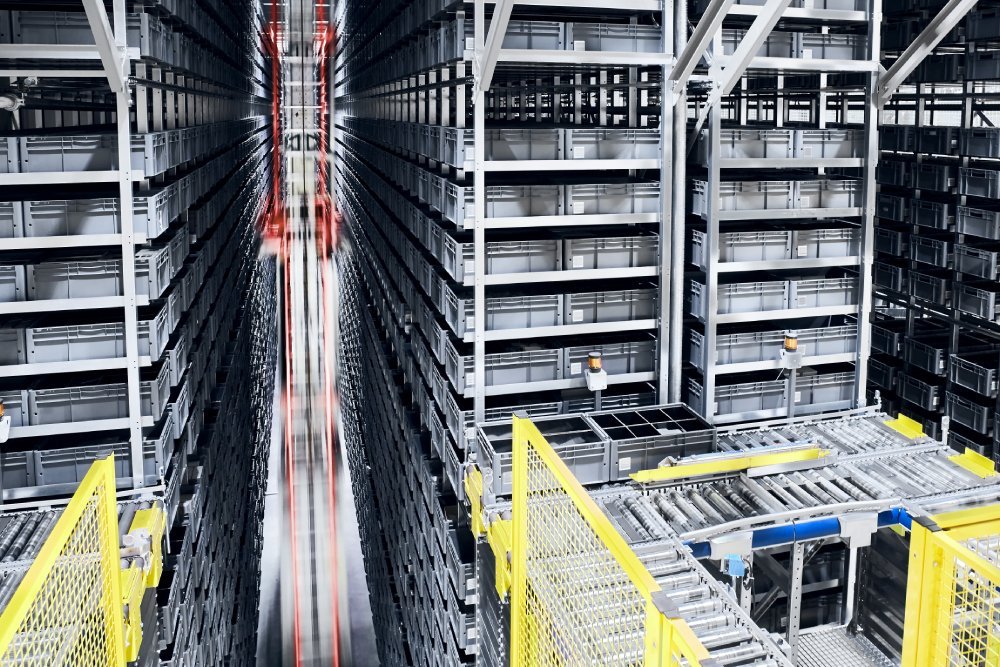

As warehouses and manufacturing facilities face increasing pressure to store more inventory, improve accuracy, and optimize available space, the automated storage and retrieval system (ASRS) has emerged as a critical solution. An ASRS storage system uses automation, software, and mechanical equipment to store and retrieve goods with minimal human intervention. However, not all automated storage retrieval systems are the same. Different industries require different ASRS types depending on load characteristics, throughput requirements, and operational complexity.
1. Unit-load ASRS systems
Unit-load ASRS systems are designed to handle heavy and palletized loads such as drums, containers, and large cartons. These systems use stacker cranes that operate within high-rise racking structures. Unit-load automated storage and retrieval systems are commonly used in manufacturing plants, automotive warehouses, FMCG distribution centers, and cold storage facilities. Their key advantages include maximum vertical space utilization, reduced forklift dependency, improved inventory accuracy, and safe handling of heavy loads.
2. Mini-load ASRS systems
Mini-load ASRS systems are intended for smaller loads such as totes, bins, or cartons. These systems operate at higher speeds and are widely used in e-commerce fulfillment centers, pharmaceutical distribution hubs, and electronics warehouses. Mini-load ASRS storage systems support goods-to-person operations, reduce picking time, and improve order accuracy, making them ideal for environments with high SKU variety and fast-moving inventory.
3. Shuttle-based ASRS
Shuttle-based ASRS solutions use autonomous shuttles running on multiple levels to store and retrieve goods. These systems are known for very high throughput and scalability. Shuttle-based automated storage retrieval systems are commonly deployed in food and beverage warehouses, retail distribution centers, and high-volume logistics operations. Their modular design allows businesses to expand capacity with minimal disruption as demand grows.
4. Vertical Lift Modules (VLMs)
Vertical Lift Modules (VLMs) are enclosed ASRS systems that automatically retrieve trays and deliver them to an operator at an ergonomic height. VLMs are widely used in tool rooms, aerospace manufacturing, medical device storage, and pharmaceutical facilities. These ASRS storage systems are ideal when floor space is limited but vertical height is available, offering excellent space utilization and improved workplace ergonomics.
5. Horizontal and vertical carousel system
Horizontal and vertical carousel systems rotate shelves or bins to bring items to a fixed picking location. Carousels are typically used for small-parts storage, maintenance rooms, and light assembly areas. While they offer lower throughput compared to shuttle or crane-based systems, they provide fast access, compact storage, and simplified operations.
When selecting an automated storage and retrieval system, businesses should evaluate load weight and dimensions, throughput requirements, building height constraints, fire and safety regulations, and integration with warehouse management or execution systems. Proper evaluation ensures that the chosen ASRS storage system delivers maximum efficiency, reliability, and return on investment.
Conclusion
An ASRS storage system is not a one-size-fits-all solution. Understanding the different types of automated storage retrieval systems and their industrial applications allows businesses to select the right technology. With the right ASRS solution, organizations can increase storage density, improve accuracy, reduce labor dependency, and build scalable warehouse operations.
ALSO READ
How ASRS Systems Can Improve Warehouse Space Utilization
ASRS Systems vs Traditional Storage: Which is Right for Your Warehouse?


