
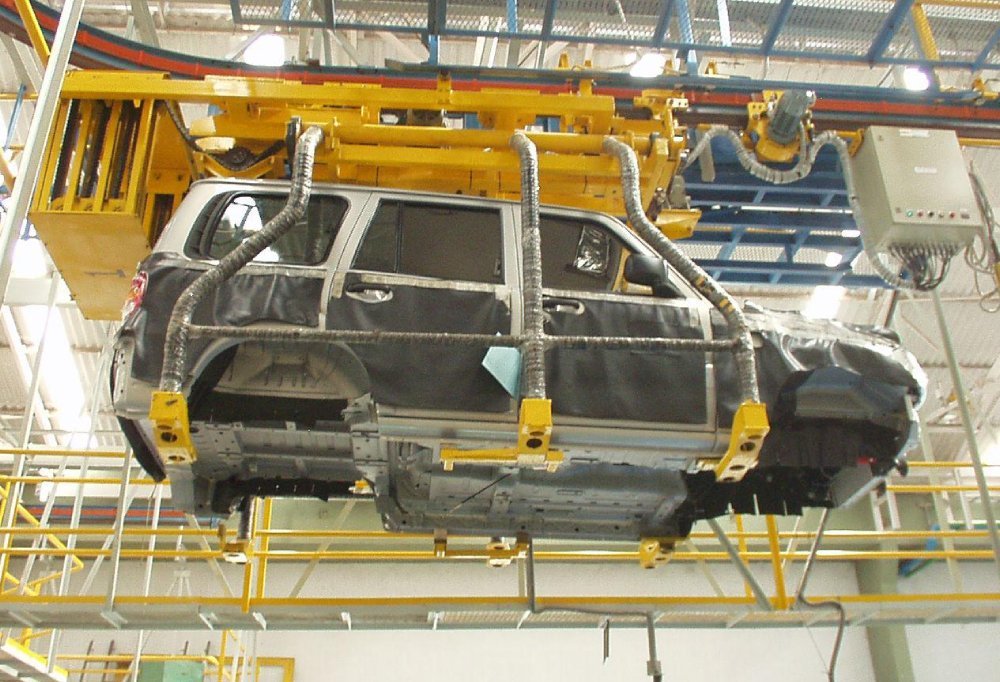
An electrified monorail system is an automated overhead material handling solution that transports products efficiently between production, storage, and assembly areas. It helps improve throughput, optimize floor space, enhance safety, and support seamless automation across industrial facilities.
Enabling Efficient Material Movement in Modern Facilities
As manufacturing and warehousing operations continue to adopt automation, businesses are increasingly seeking material handling solutions that improve efficiency, reduce manual intervention, and support scalable production. One technology that has gained significant attention across industries is the electrified monorail system.
Designed to transport materials automatically along predefined routes, these systems help streamline production workflows while supporting higher levels of operational control.
An electrified monorail system consists of powered carriers that move along an overhead track network, transporting components, assemblies, or finished products between various production and storage areas. These systems are widely used in industries such as automotive manufacturing, warehousing, logistics, tire production, and heavy industrial assembly operations.
By automating material movement and integrating seamlessly with production processes, electrified monorail systems deliver a range of operational and financial benefits.
Improving Production Efficiency
One of the primary advantages of an electrified monorail system is its ability to maintain continuous and controlled material flow throughout a facility. Traditional material handling methods often depend on forklifts, manual transport equipment, or fixed conveyor systems that may create bottlenecks or require additional labor.
Electrified monorail systems automate transportation between workstations, assembly lines, storage locations, and inspection areas. This reduces waiting times and ensures materials arrive at the right location when needed.
As a result, production processes remain synchronized, supporting higher throughput, improved workflow coordination, and increased operational efficiency.
Supporting Better Space Utilization
Floor space is a valuable asset in manufacturing and warehouse environments. Conventional material handling equipment often occupies significant floor area, limiting operational flexibility and storage capacity.
An electrified monorail system operates on an overhead track structure, freeing up valuable floor space for production equipment, storage systems, and personnel movement.
By utilizing overhead pathways, facilities can optimize layouts, increase usable workspace, and improve overall space utilization without compromising material handling performance.
Enhancing Interfacing with Automated Systems
Modern manufacturing facilities rely on seamless coordination between various automated systems, including robotic cells, assembly stations, inspection equipment, and storage solutions. Material handling infrastructure must support this interconnected environment.
An electrified monorail system can be integrated with production control systems, sensors, automated storage solutions, and manufacturing execution systems.
This enables smooth interfacing between multiple operational processes and helps maintain consistent product flow throughout the facility while reducing manual coordination requirements.
Improving Traffic Management and Workplace Safety
Facilities that rely heavily on forklifts and manual transport vehicles often face challenges related to traffic congestion, operational delays, and workplace safety risks. Multiple transport routes can increase the likelihood of accidents and create inefficiencies in material movement.
By utilizing dedicated overhead pathways, an electrified monorail system reduces floor-level traffic and creates a more organized material handling environment.
This structured movement improves traffic management within the facility, minimizes transportation conflicts, and reduces interactions between personnel and moving equipment.
Increasing Reliability and Operational Consistency
Consistency is essential in high-volume manufacturing and logistics operations. Material delivery delays can disrupt production schedules and affect overall facility performance.
An electrified monorail system provides predictable and repeatable material transport, ensuring that products move through the facility according to established schedules.
Automated routing and controlled movement help minimize variability, reduce production interruptions, and maintain stable operational performance.
Supporting Scalability and Future Growth
As production demands evolve, facilities need automation solutions that can adapt to changing requirements. Electrified monorail systems offer flexibility that supports future expansion and process modifications.
Additional carriers, track extensions, routing changes, and new workstations can often be incorporated without significant disruption to existing operations.
This scalability allows businesses to increase production capacity, improve workflow flexibility, and maintain efficient material movement as operational requirements change.
Conclusion
The electrified monorail system has become a valuable solution for organizations seeking to improve material handling automation. By enhancing production efficiency, optimizing space utilization, improving traffic management, supporting automation integration, and delivering reliable material movement, these systems help businesses build more efficient and future-ready operations.
As industries continue to focus on productivity, safety, and operational flexibility, investing in an electrified monorail system can provide a strong foundation for long-term material handling performance and sustainable growth.


Leave a Reply