 Address:

Power and free conveyor systems provide flexible, controlled material movement for complex manufacturing and assembly operations. Leading power and free conveyor manufacturers design these systems to support independent load movement, accumulation, routing, and seamless integration with automated production equipment.
What Is a Power and Free Conveyor?
A power and free conveyor is an advanced material handling system designed to move products through different stages of a production or assembly process. Unlike conventional continuously moving conveyors, it allows individual carriers to stop, accumulate, change routes, or move independently without stopping the entire conveyor line.
The system typically uses two tracks. The powered track moves the drive chain continuously, while the free track carries individual trolleys holding the product or component. This arrangement provides greater control over material movement and makes the power and free conveyor system suitable for manufacturing environments with multiple processing stages.
How Does a Power and Free Conveyor System Work?
A power and free conveyor system uses a combination of powered chains, free-moving carriers, switches, stops, and control mechanisms. Carriers can be engaged or disengaged from the powered chain depending on production requirements.
This allows manufacturers to control the movement of individual products according to takt time and workstation availability. Loads can accumulate before a workstation without affecting upstream operations, while switches can direct different carriers toward separate production routes.
Modern systems can also interface with PLCs, sensors, robotic equipment, and other automated machinery to coordinate material movement across the production line.
Key Applications in Automotive Manufacturing
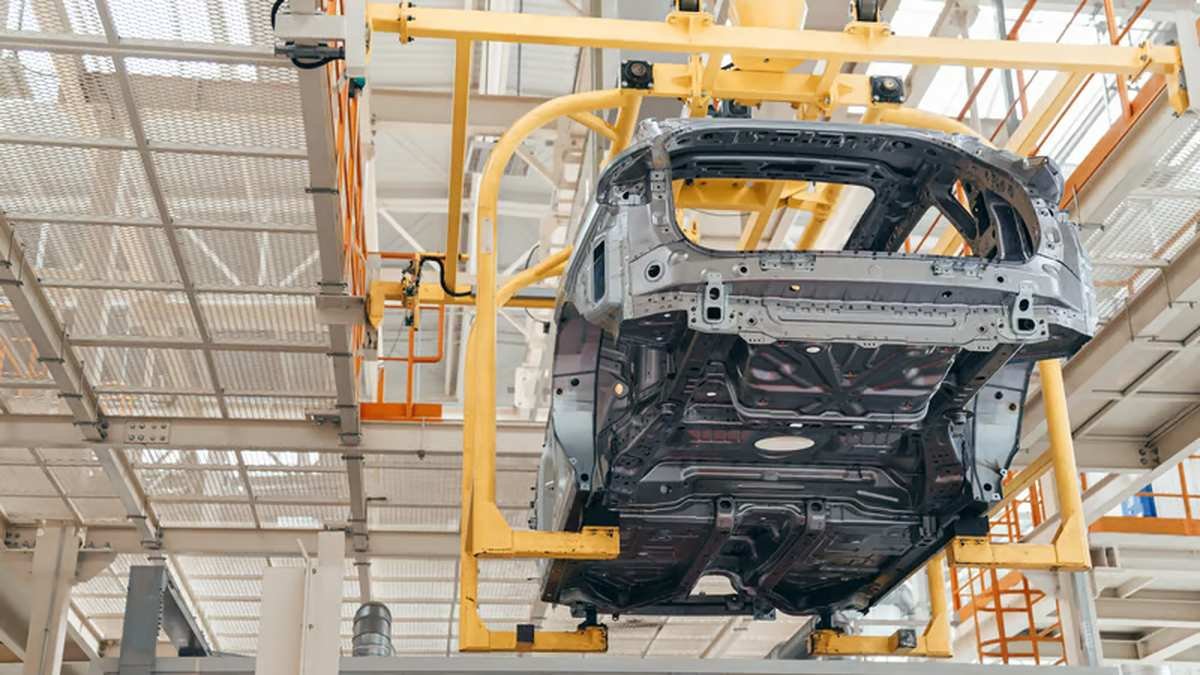
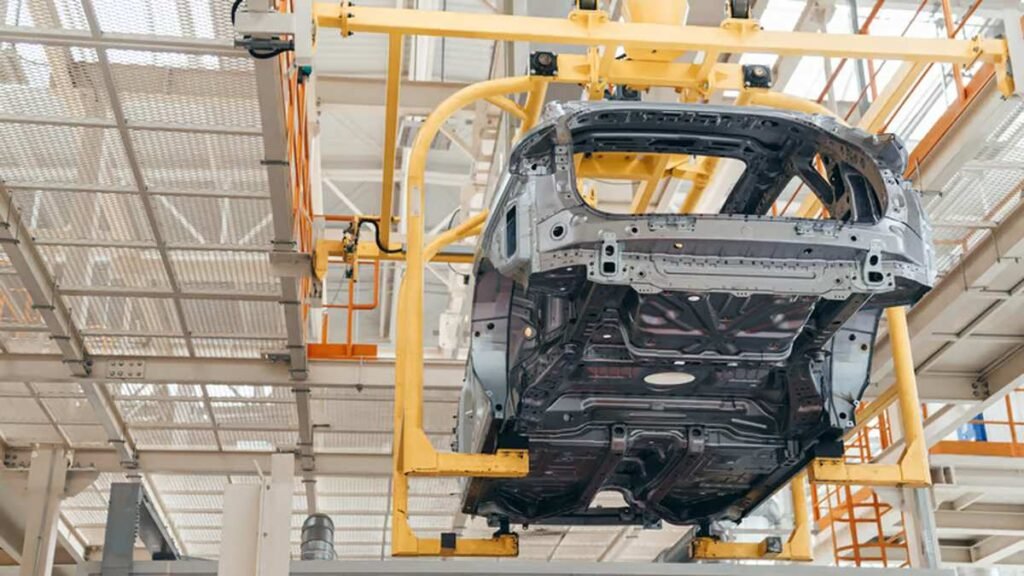
Automotive manufacturing is one of the major applications for a power and free conveyor. Vehicle bodies, chassis, engines, and other large components often need to travel through multiple assembly and processing stages at different speeds.
A power and free overhead conveyor can transport these components above the production floor, helping optimize available space while maintaining an organized material flow. Carriers can stop at assembly stations, move through inspection areas, or be routed to different production processes according to operational requirements.
This flexibility makes the system particularly useful for body shops, paint shops, assembly lines, and component manufacturing facilities.
Applications Across Other Industries
While automotive manufacturing is a major application, power and free conveyor systems can also support operations in tire manufacturing, heavy engineering, warehousing, and other industrial facilities.
They are particularly valuable when products require different processing times or must follow different production routes. Depending on the application, systems can be designed for component handling, work-in-process movement, finishing operations, inspection processes, and assembly applications.
Experienced power and free conveyor manufacturers evaluate load characteristics, production volumes, process sequence, facility layout, and equipment interfaces before developing the appropriate conveyor configuration.
Better Traffic Management and Production Control
Managing material traffic becomes increasingly important as manufacturing facilities become more automated. Multiple products moving simultaneously between workstations can create congestion if material flow is not properly controlled.
A well-designed power and free conveyor system enables controlled accumulation and routing of carriers. Products can wait in designated buffer areas until the next workstation becomes available. This helps reduce unnecessary stoppages and supports better synchronization between different stages of production.
Traffic management can also be integrated with the facility’s automation controls to improve visibility and coordination across the production process.
Benefits of a Power and Free Overhead Conveyor
A power and free overhead conveyor offers several operational advantages, particularly in facilities where floor space and production flexibility are important considerations.
By using overhead space, the system can keep production floors more accessible for operators, machinery, and other material handling activities. Independent carrier movement also provides greater flexibility when handling multiple product variants or processes with different cycle times.
The ability to accumulate, stop, transfer, and route loads makes these systems suitable for complex industrial workflows where conventional conveyor movement may not provide sufficient flexibility.
Choosing Power and Free Conveyor Manufacturers in India
Selecting experienced power and free conveyor manufacturers requires evaluating more than equipment specifications. Manufacturers should have strong engineering capabilities and an understanding of production layouts, takt time, automation, safety requirements, traffic management, and interfacing with other equipment.
The right conveyor partner should also provide support across system design, manufacturing, installation, commissioning, and after-sales service. This ensures that the conveyor solution is aligned with both current production requirements and future operational needs.
Conclusion
A power and free conveyor provides the flexibility and control required for complex material handling and production environments. From automotive assembly to tire manufacturing and heavy industrial applications, these systems help coordinate material movement while supporting automated workflows.
By working with experienced power and free conveyor manufacturers, businesses can implement a reliable power and free conveyor system or power and free overhead conveyor designed around their production processes, facility layout, and long-term automation requirements.


Leave a Reply