 Address:


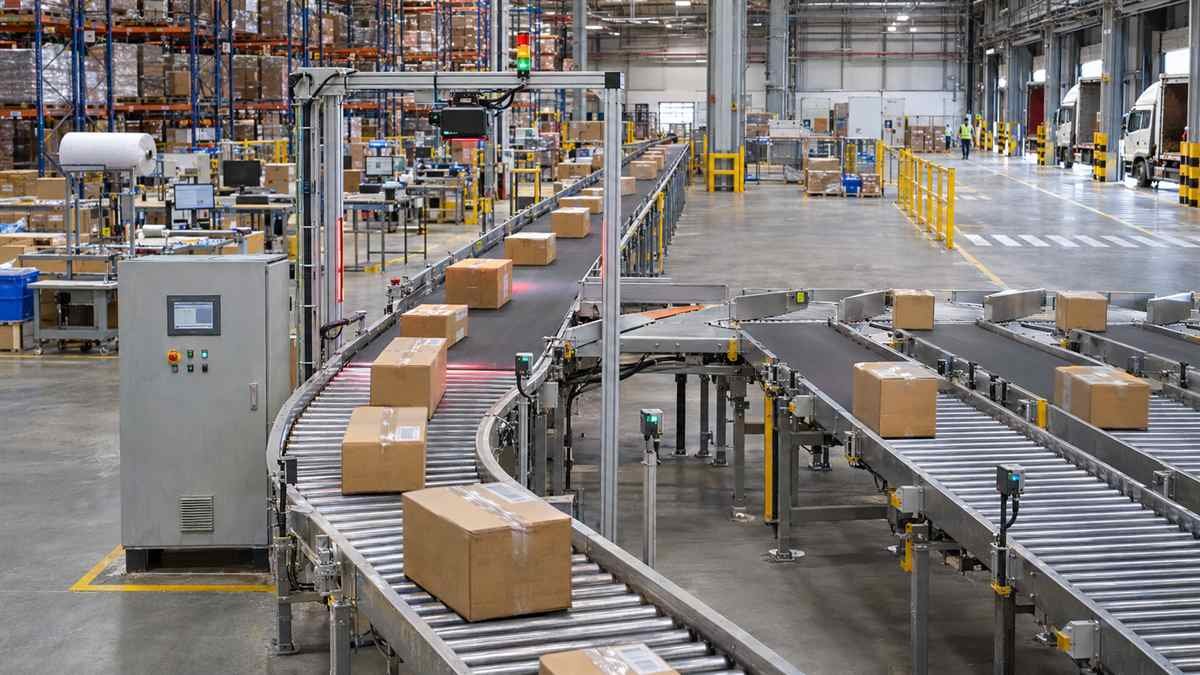
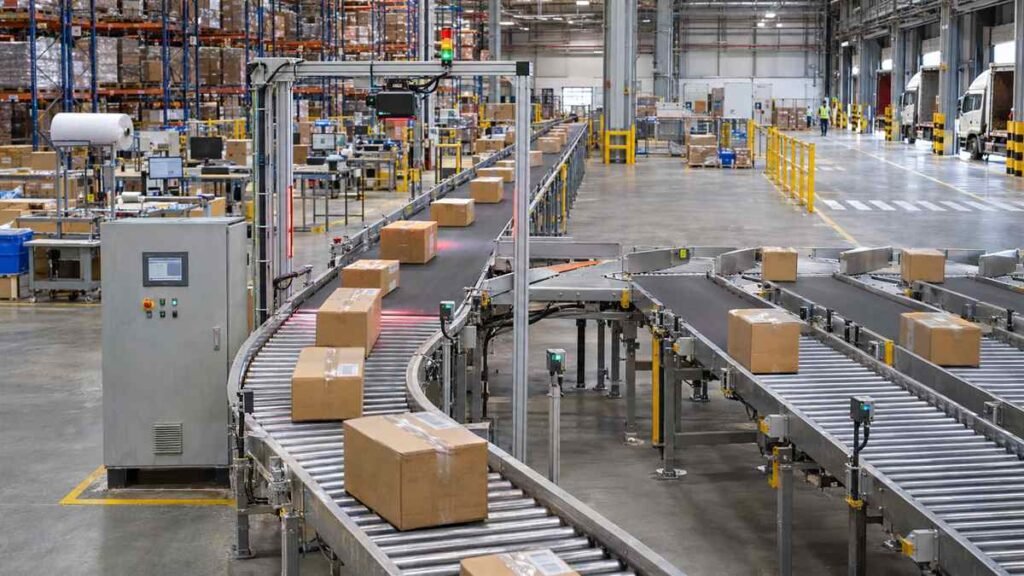
At 4:30 PM, a distribution centre can look busy without actually moving quickly.
Forklifts are operating. Pickers are completing orders. Packing tables are occupied. Dispatch vehicles are waiting outside. Yet cartons may still be sitting near a merge point, a packing lane, or a temporary staging area because the next part of the process is not ready.
For warehouse managers and logistics managers, this is a familiar situation. The delay is not always caused by a lack of manpower. Sometimes the warehouse simply has too many manual handovers between receiving, storage, picking, packing, and dispatch.
Warehouse conveyor systems can help create a more organised route for cartons, totes, cases, and other unit loads. But the real value comes from solving a specific flow problem—not from installing conveyors only because a warehouse is growing.
Follow one carton before changing the layout
Before planning automation, follow one order through the warehouse.
Receiving → Storage → Picking → Packing → Sortation → Dispatch
This route looks simple on paper. On the warehouse floor, each stage can create a delay.
A carton may arrive at receiving but wait for scanning. A picked order may be ready but sit beside a workstation because the packing area is full. A packed carton may wait again because there is no clear route to the correct dispatch dock.
If a warehouse team follows only reports and dashboards, these small delays are easy to miss. Walking the floor often shows the real issue more clearly.
| Stage | What may be happening | What needs attention |
| Receiving | Inbound cartons collect near docks | Unloading, scanning, and movement towards storage |
| Picking | Pickers carry orders over long distances | Transfer of totes or cartons between pick zones |
| Packing | Completed orders arrive unevenly | Controlled release of orders to packing stations |
| Sortation | Cartons are mixed before dispatch | Identification, routing, and lane allocation |
| Dispatch | Packed orders wait near loading bays | A clear path to the correct outbound dock |
The purpose of a conveyor is not simply to move cartons faster. It is to reduce the number of times a completed order has to stop, wait, or be handled again.
The pressure point is often between picking and packing
Many warehouses focus heavily on picking productivity. That makes sense because picking is labour-intensive and directly affects order volume.
However, faster picking does not always mean faster fulfilment.
If orders leave the pick zone faster than the packing team can handle them, cartons start accumulating. Workers then spend time arranging them, finding space, checking labels, or asking which order should move next. What began as an attempt to improve picking speed can create congestion at the next stage.
A well-planned conveyor route can help manage this handover.
For example, cartons can move from picking towards packing in a controlled sequence. If a packing station is occupied, the next carton can wait in an accumulation zone instead of blocking the aisle or being placed on the floor. When the station becomes available, the carton can move forward.
This gives supervisors a clearer view of the process. They can see whether the delay is happening in picking, packing, labelling, or dispatch rather than simply seeing cartons stacked in one area.
A warehouse does not need to automate every movement
One common mistake is trying to automate the entire warehouse at once.
Not every operation needs a conveyor. In some areas, manual movement may still be practical. A low-volume product line, an irregularly shaped item, or a temporary process may not justify a fixed conveyor route.
The better approach is to identify repetitive movement that adds little value.
For example:
- Pickers repeatedly walking completed orders to packing
- Packaged cartons being carried towards the dispatch area
- Staff manually separating cartons for different loading lanes
- Goods waiting because one area has no space to receive them
- Forklifts travelling short, repetitive routes only to move cartons between two fixed points
These are the situations where a conveyor system may make operational sense.
The goal is not to replace every person or every vehicle. It is to remove the movement that causes congestion, waiting, and unnecessary handling.
The system must suit the goods, not just the building
A 3PL warehouse may handle different clients, different carton sizes, and changing daily volumes. This makes the design more complex than a facility moving one standard product.
A conveyor arrangement should account for the actual goods being handled.
Lightweight cartons, rigid totes, polybags, full cases, and palletised loads do not behave in the same way. Some require stable support. Others need controlled spacing. Some may need barcode scanning or weighing before they continue to the next stage.
Before deciding on the equipment, the warehouse team should understand:
- The smallest and largest carton dimensions
- Maximum and minimum load weights
- Peak orders per hour
- Number of active dispatch lanes
- Whether orders need accumulation before packing
- Whether cartons need to be merged, diverted, or sorted
- Space around pillars, doors, docks, and walkways
- Future changes in clients, product categories, or order volume
This information helps avoid a system that works only during normal operations but struggles when volumes rise.
A conveyor route should make the warehouse easier to manage
The best warehouse conveyor systems do not create a new obstacle for workers.
They should leave enough room for people to move safely, allow practical access for maintenance, and fit around the actual working pattern of the warehouse. A line that looks efficient in a layout plan may become difficult to use if it blocks access to storage, packing material, emergency exits, or loading areas.
There is also a control side to consider.
A carton may need to wait because its order is incomplete. Another may need to go to a different packing station. A third may need to be held for a quality check. The conveyor and the warehouse control system should support these decisions.
The equipment moves the carton. The process decides where it should go.
Do not ignore the exception cartons
Every warehouse has exceptions.
A label may not print correctly. An order may need another item. A carton may be damaged. A customer may request special packing. Returns may enter the same area as outbound goods.
A practical layout includes a clear route for these cases. If exception cartons are left on the main conveyor path, they can interrupt the flow of every other order.
This is why warehouse teams should plan for normal operations and non-standard situations. A conveyor system should make exceptions easier to manage, not force workers to stop the full line whenever something unexpected happens.
The conversation should begin with the bottleneck
Before discussing conveyor speed, automation level, or equipment type, warehouse managers should ask a simpler question:
Where do completed orders start waiting?
The answer may be receiving, picking, packing, sortation, or dispatch. It may also be a combination of two connected areas.
Once the bottleneck is clear, the warehouse can decide whether the solution requires a conveyor, a better storage route, additional workstations, improved scanning, or a different process sequence.
For 3PL and distribution centres, the right conveyor arrangement can create more than faster movement. It can make the warehouse easier to control during peak periods, easier to scale as volumes grow, and easier for teams to work in without constantly managing carton congestion.
If cartons continue to wait between receiving, packing and dispatch, discuss your warehouse conveyor requirements with Automag India.


Leave a Reply